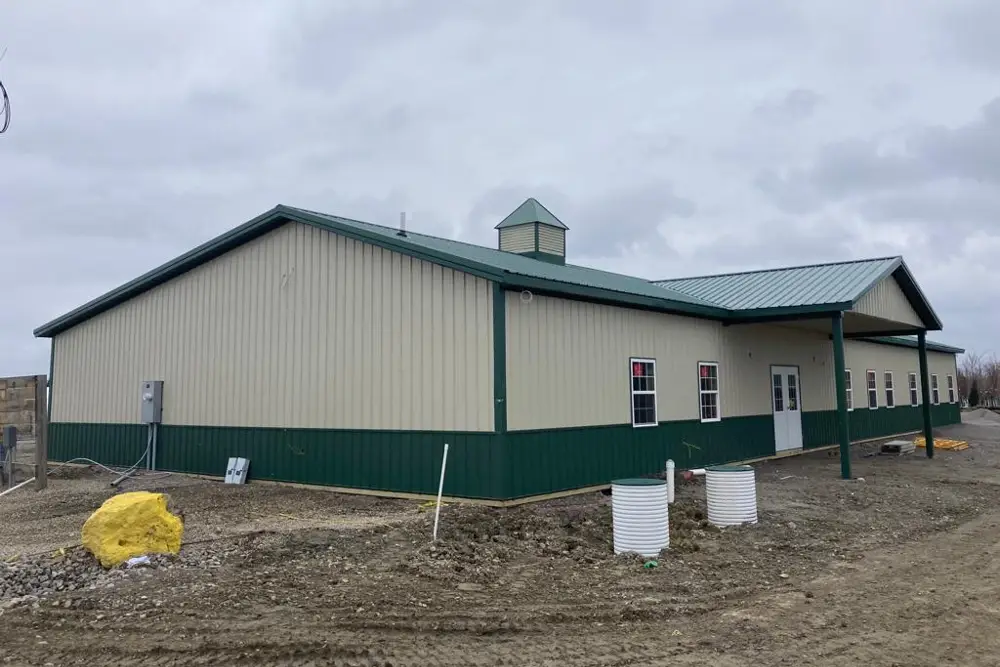
You don’t have to be in the building trades to recognize true craftsmanship when you see it. There’s something unmistakable about a well-built structure—clean lines, tight joints, and the quiet confidence that comes from a team who knows their work inside and out. It’s that kind of pride that draws so many people to Amish-built pole barns.
More than just a style or tradition, Amish pole barn construction has earned a reputation for being deliberate, detail-driven, and rooted in time-honored techniques. And it’s not just nostalgia fueling that interest. According to a 2022 report by Builder Magazine, nearly one in five rural post-frame projects in the Midwest and Northeast now involve Amish or Mennonite construction crews. That tells you something: people still value quality, even in a world obsessed with speed.
If you’re exploring Amish pole barn builders near you—whether you’re in Ohio, Pennsylvania, Indiana, or any of the surrounding regions—there are a few things you should know before starting your project. From how Amish crews work, to scheduling logistics, to what happens when snow starts falling, this post will walk you through the process so you can make informed decisions and avoid surprises.
Let’s get into it.
It starts with the approach to craftsmanship. Amish builders are known for their precision, patience, and commitment to doing things the right way, even when it takes more time. That doesn’t mean they’re slow—it just means every board, every brace, every measurement is intentional.
Most Amish construction crews work together daily and often for years. That consistency builds an almost unspoken rhythm on the job site. Crews work quickly, efficiently, and with minimal waste. Their tools are often battery-powered, allowing them to maintain their traditional values while still working with impressive speed and accuracy. Many Amish crews also hand-finish certain elements of a build, especially when it comes to trim, doors, and framing connections.
These aren't prefabricated structures thrown together in a weekend. Every barn is built on-site, with careful attention to leveling, alignment, and joint integrity. In fact, the hand-built nature of the work is part of what gives Amish pole barns their staying power. When built correctly, a pole barn of this kind can easily last 40 to 60 years—or more—with routine maintenance.
Working with Amish builders can look a little different than working with a conventional contractor, and that’s not a bad thing—it just requires clear expectations and good communication on the front end.
Scheduling is often done through an English-speaking liaison or partner who handles phone calls, emails, and site coordination. That person is your point of contact for the build and can typically provide estimated start dates, crew availability, and lead times for materials. Since Amish crews usually don’t use cell phones or computers themselves, communication is less digital and more deliberate. But don’t mistake that for being disorganized. In fact, Amish crews are some of the most punctual and consistent teams you’ll ever hire.
Project timelines depend on crew size, weather, and your project’s scope. Most builds are scheduled in blocks—once the crew commits to your project, they’re focused entirely on your site until the work is done. That focused effort often leads to faster builds and fewer delays.
Amish pole barn construction still uses many of the same high-quality materials you’d find in any modern build. The difference lies in how those materials are handled and assembled.
Many crews source their lumber locally or work with mills that understand the specific dimensions and quality standards they prefer. Some even cut and prep certain components in advance using traditional tools, especially when specialty joinery is required. That means fewer delays and a higher degree of fit and finish once on site.
Delivery logistics are usually arranged by the liaison. Trucks deliver materials directly to your property, and the Amish crew handles unloading, staging, and securing everything in a way that minimizes mess and maximizes build speed. And since these crews are used to working efficiently with limited equipment, their workflow often looks like a finely tuned dance.
It’s also worth noting that Amish builders tend to use their tools for longer periods and maintain them meticulously. That pride in tools often carries over into the workmanship itself. Nothing gets rushed or sloppily finished. Everything is squared, leveled, and double-checked.
Yes, you can build with Amish pole barn crews through the winter—but you’ll want to plan ahead. In cold-weather states like Ohio and Pennsylvania, Amish crews continue working year-round, provided conditions are safe and the ground isn’t completely frozen.
The trick is scheduling. Winter builds often require more lead time to line up crews and ensure material availability. Once construction starts, the goal is to move quickly and efficiently. Many Amish crews are used to working in snow and cold, and they plan accordingly with workwear, tool prep, and strategic sequencing of the build.
Depending on the foundation style—whether you're setting posts directly in the ground or anchoring to a concrete slab—timing matters. If you're pouring concrete, you may need to complete the slab before temperatures drop too low. Alternatively, if your posts are embedded, frost line depth will determine how deep your footings need to go.
While winter construction may come with some minor trade-offs, many clients appreciate the faster scheduling and quieter timelines that come with off-season builds. With the right planning, you can absolutely build a pole barn during the colder months and be ready to use it by spring.
A common misconception is that Amish pole barns are limited in their design. In reality, Amish builders can offer a surprising degree of customization—as long as you define it clearly at the start.
You can choose your building dimensions, roof pitch, siding and roofing materials, door placements, and window styles. Interior framing can also be added if you plan to insulate or finish out sections later. Many crews can incorporate overhangs, porches, lofts, or even clerestory windows, depending on the layout.
What’s different is how those choices are communicated. Because Amish crews don’t rely on emails or shared design software, it’s critical to work with a builder who translates your preferences into a clear, buildable plan the crew can follow. At Dutch Builders, we create detailed site layouts and structural drawings that align with Amish build techniques, ensuring every element is feasible—and beautifully executed.
We’ve had the honor of working alongside Amish pole barn builders for years, and what continues to impress us is the consistency. The quality. The care. It’s the same attention to detail you’d expect if they were building their own homes, not just yours.
By combining our project management, engineering support, and client communication with Amish craftsmanship on the job site, you get the best of both worlds: a process that feels personal and professional, and a structure that will stand the test of time.
Whether you’re planning a small storage barn or a multi-purpose workspace, we’re here to help you navigate every step—from site prep to permit review to final build. We speak both languages, so to speak: the precision of engineered drawings, and the quiet focus of a traditional build crew.
Yes, you can. Amish builders are highly capable when it comes to custom dimensions, layouts, and even aesthetic elements like roof overhangs, windows, and doors. The key is to clearly define your design preferences ahead of time and work with a builder who can translate those into practical construction drawings.
Most materials are sourced from regional suppliers or local mills, depending on the crew’s location and preferences. Lumber is often selected for quality and consistency, and many components are prepped before delivery to the job site. Dutch Builders manages the material ordering and delivery logistics for you.
Communication is typically handled through an English-speaking liaison who coordinates with the Amish crew. This person provides updates, relays questions, and ensures everything stays on track without requiring direct communication between you and the crew.
Yes, many Amish crews work year-round, including during winter months. You may need to plan around weather conditions and site access, but with the right preparation, winter builds are often faster to schedule and just as high in quality.
In today’s fast-moving world, it’s rare to find a construction experience that feels grounded, honest, and built on values that go deeper than the contract. That’s what working with Amish pole barn builders offers—a connection to quality, to tradition, and to a slower, more thoughtful way of building.
At Dutch Builders, we bring those values forward while handling the modern logistics: permits, communication, scheduling, and coordination. We honor the craft, while keeping the process clear and professional for you. And the result is something you can feel proud of for generations.
If you're ready to explore your options or have questions about planning a pole barn in your area, reach out to us today. We're here to help you get started—and to help you build something worth passing down.
You bring the vision. We’ll handle the rest.
Schedule your planning session today.


