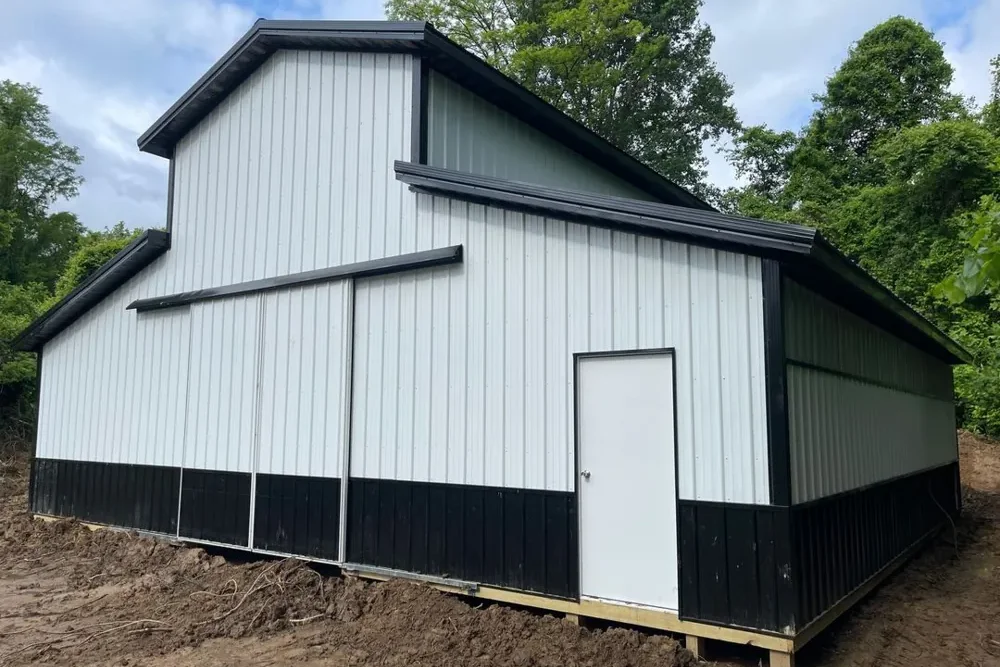
In Ohio, a barn is rarely just a barn. It might start as a place for livestock, then slowly become equipment storage, hay protection, a workshop, a machinery shelter, or the kind of all-purpose building that keeps a property running through every season. That is part of what makes barn planning so important. When landowners start searching for barn builders in Ohio, they are not only looking for someone who can put up walls and a roof. They are looking for a builder who understands how a structure needs to breathe, how moisture moves through a building over time, how livestock changes the design conversation, and how to create something that still makes sense ten or twenty years down the road.
That matters more than many people realize. A barn is one of the hardest-working structures on any rural property. It deals with Ohio humidity, winter cold, summer heat, shifting use patterns, equipment wear, and in many cases, the daily demands of animal care. A good barn builder does not treat those conditions like small details. They plan for them from the first conversation. They think about airflow before the roof goes on. They think about livestock safety before the layout is finalized. They think about durable materials before the walls are closed in. And they think about future use before the first post is set.
That is the difference between simply constructing a building and truly planning one. In Ohio, where agricultural operations and multi-use properties are both common, barn design has to do more than look strong from the road. It has to function season after season, under real working conditions, with as few compromises as possible.
Ohio is not a one-condition building environment. The weather moves. The moisture changes. The building may deal with snow load in winter, condensation in spring, heavy humidity in summer, and wind exposure all year long. For agricultural landowners, that means barn planning is never just about size and appearance. It is about performance under changing conditions.
A barn built for Ohio land has to account for practical realities. If livestock will be housed inside, ventilation and interior layout become major priorities. If feed or hay will be stored, moisture control becomes essential. If tractors, implements, trailers, or service vehicles will be moved in and out regularly, clearances and access points need to be planned carefully. And if the owner hopes to use the building for multiple purposes over time, the structure has to be flexible enough to adapt without becoming awkward or expensive to modify later.
This is where experienced barn builders separate themselves. They understand that a successful barn is not designed around a single moment in time. It is designed around the life of the property. What works on paper for a simple storage shell may not work at all for an active livestock setup or a multi-use agricultural building. Good planning means asking what the building needs to do now, what it may need to do later, and what structural choices will support both.
A livestock barn should never be approached like a general storage building with animals added later. Livestock changes everything about design. Animals create heat, moisture, air contaminants, movement patterns, and safety concerns that demand thoughtful planning from the beginning.
The first issue is air quality. Animals need a healthy environment, and that means the barn has to support steady air exchange without creating dangerous drafts or temperature stress. Stale air, trapped moisture, and poor circulation can lead to respiratory problems, bedding deterioration, odor buildup, and overall poor conditions inside the structure. A barn suitable for livestock must be planned to encourage airflow while protecting animals from direct exposure to harsh weather.
The second issue is layout. Livestock barns need circulation paths that make daily care easier and safer. Feed delivery, watering access, cleaning, bedding replacement, and animal movement all become part of the design conversation. A builder who understands livestock use will think beyond square footage and start thinking about how the building functions hour by hour. Wide enough aisles, proper gate placement, durable interior finishes, and safe separation zones all contribute to a barn that works well in real life.
The third issue is material durability. Livestock environments are hard on buildings. Moisture levels are higher. Wear is more constant. Surfaces are exposed to impact, waste, cleaning routines, and seasonal swings in temperature. A livestock barn needs materials and detailing that can hold up under those conditions without creating ongoing maintenance headaches.
When all of those concerns are addressed together, the result is not just a barn that can hold animals. It is a barn that actively supports animal health, safety, and daily management.
One of the biggest misconceptions in barn planning is that ventilation is a nice extra instead of a basic requirement. In reality, ventilation is one of the most important parts of a working barn, especially in Ohio where moisture and seasonal temperature shifts can create problems quickly.
A proper ventilation system helps control humidity, remove stale air, reduce airborne contaminants, and support a more stable indoor environment. In livestock buildings, that matters for animal health. In storage buildings, it matters for material preservation. In mixed-use barns, it matters for everything from comfort to condensation control.
Ventilation can be passive, mechanical, or a combination of both depending on the building’s use. Passive strategies may include ridge vents, eave vents, vented sidewalls, open overhangs, cupolas, or carefully positioned openings that encourage natural air movement. Mechanical systems may include fans or other active airflow solutions when the building use requires tighter control. The right approach depends on the size of the structure, interior occupancy, seasonal use, and the specific demands of the property.
The important thing is that ventilation should be built into the plan, not added as an afterthought. Too often, landowners discover moisture or odor issues after the building is already in service. By then, the fixes can be less effective and more expensive. A well-planned barn starts by asking how air will move through the structure in summer, in winter, and during the damp in-between seasons when condensation tends to show up.
Good barn builders in Ohio know that the building has to breathe. Not loosely, not accidentally, and not only when doors are open. It has to be designed to manage airflow in a controlled and intentional way.
Airflow is not only about vents and fans. It is also about how the structure itself is shaped and assembled. Roof pitch, ceiling height, opening placement, overhang design, and interior obstructions all affect how air moves inside a barn. This is where structural planning and ventilation planning become inseparable.
For example, a barn with poor opening placement may trap humid air in corners or create dead zones where circulation is weak. A structure with low clearances may limit heat rise and air movement. A building with an unbalanced combination of inlet and outlet ventilation may struggle to exhaust moisture efficiently. Even the way interior partitions are arranged can influence whether fresh air reaches the areas that need it most.
That is why airflow planning should be addressed structurally, not just mechanically. A builder who understands agricultural use will think about where warm air collects, where moisture tends to linger, and how building geometry affects ventilation performance. They are not just creating a shell. They are shaping an environment.
This approach becomes especially important in multi-use barns where one part of the structure may house animals, another may hold equipment, and another may function as a workshop or enclosed storage area. Each of those spaces has different airflow needs, and a smart layout has to recognize that from the start. The best results come when the structure is designed to support multiple environmental zones without letting one create problems for the others.
If there is one thing that quietly shortens the life of agricultural buildings, it is uncontrolled moisture. It does not always announce itself dramatically at first. Sometimes it shows up as condensation on metal panels. Sometimes it appears as musty air, damp bedding, rusting fasteners, softening wood, or insulation that no longer performs the way it should. Over time, though, moisture has a way of turning small issues into expensive ones.
In Ohio, moisture control deserves serious attention because the climate creates repeated opportunities for condensation and damp conditions. Cold exterior temperatures combined with interior humidity can cause moisture to form on building surfaces. Stored hay, livestock respiration, wet equipment, washing routines, and muddy foot traffic can all contribute to elevated humidity levels inside a barn.
That means barn builders have to think carefully about how the entire envelope handles moisture. Roofing systems, wall assemblies, underlayment choices, ventilation paths, drainage planning, grade control, and foundation detailing all play a part. A barn that looks perfectly sound from the outside can still struggle internally if moisture has nowhere to go.
Good moisture control starts with water management outside the building. Site drainage matters. Roof runoff matters. Splash protection matters. Interior floor design matters too, especially if animals are involved or if equipment enters the building wet. Once water and humidity are in the picture, the building needs a strategy to shed, dry, and resist those conditions without allowing them to settle into the structure.
This is one of those areas where experienced planning pays off in a big way. Landowners often focus on the visible parts of a barn, but long-term performance is usually decided by what happens behind the surfaces and under the roofline.
Barn materials have to do more than look good on day one. They have to hold up to abrasion, humidity, impact, temperature swings, and constant use. In an agricultural setting, that means durability is not a marketing phrase. It is a daily requirement.
Metal panels remain popular for many barns because they are practical, efficient, and well suited to large agricultural structures when installed correctly. They can provide durable exterior protection and a clean finished appearance. But the performance of those panels depends on quality coatings, proper fastening, correct underlayment choices, and a building design that addresses condensation and corrosion risks.
Wood components also deserve close attention. The grade, treatment, location, and protection of structural and secondary wood elements all matter. In barns where moisture exposure is ongoing, the wrong material in the wrong place can lead to premature deterioration. Interior kick walls, stalls, partitions, and heavily used lower wall sections need materials that can withstand wear and repeated impact.
Durability also extends to doors, hardware, and access systems. Large sliding doors, overhead doors, latches, hinges, and gate systems need to stand up to regular agricultural use. A barn may be beautifully framed, but if daily-use elements fail constantly, the building becomes frustrating instead of functional.
The most durable barns are not always the ones with the fanciest features. They are the ones where each component is chosen for the actual working conditions of the property. That kind of practical decision-making is one of the clearest signs of a capable builder.
Many Ohio landowners are not building for just one use. They want a barn that can serve current agricultural needs while leaving room for future changes. That may mean a structure that stores machinery today, houses animals seasonally, and later becomes part workshop, part storage, and part equipment shelter. It may even evolve into a more specialized commercial or hobby-use building over time.
That kind of flexibility does not happen by accident. It comes from structural planning. Wide clear spans, sensible door placement, adequate ceiling height, durable floor systems, and a layout that can be divided or reconfigured later all make a difference. Builders who specialize in agricultural and multi-use structures understand that a barn often needs to change with the property owner’s life, operation, or business.
This is one reason open interior planning is so valuable. A building with fewer permanent obstructions gives landowners more options later. A barn that is easy to access with equipment is often easier to adapt for workshop or storage use. A structure designed with utility routing in mind will be simpler to upgrade if enclosed conditioned space is needed in the future.
Flexibility is especially important on family land, where one generation may use the building one way and the next may need it for something else entirely. Good barn builders do not just ask what the owner wants today. They ask what the property may need five, ten, or twenty years from now.
There is a big difference between a building that contains activity and a building that supports it. A smart barn design makes daily routines easier. It reduces wasted movement. It protects what matters. It creates safer conditions for people, animals, and equipment. It helps the property operate with less friction.
That means access points should feel intentional. Traffic patterns should make sense. Ventilation should help the building stay dry and usable. Lighting should be considered early, even if the initial build is simple. Interior space should not only exist on paper but function well under actual working conditions.
For agricultural landowners, this is where value becomes very real. A well-planned barn saves time. It reduces preventable wear. It lowers the chance of avoidable animal stress or equipment damage. And over the long term, it gives the property an asset that keeps earning its place year after year.
Barn building is often talked about in terms of square footage and shell pricing, but the better conversation is about function. What kind of day will this building support? What pressures will it face in January, in July, and during the muddy weeks in between? What habits will it encourage, and what problems will it prevent? Those are the questions that lead to better barns.
A good barn should feel like it belongs on the property from the day it goes up. Not because it looks nice from a distance, although that matters too, but because it starts doing real work immediately and keeps doing it well through changing seasons and changing needs. That kind of building does not come from guesswork. It comes from careful planning, practical design, and a builder who understands agricultural life beyond the shell itself.
For Ohio landowners, that means looking for more than a low price or a fast install. It means looking for a team that understands livestock safety, ventilation systems, structural airflow planning, moisture control, durable materials, and the long view of barn ownership. A well-built barn should not only solve today’s needs. It should give the property room to grow, adapt, and stay productive for years to come.
That is what makes the right builder worth finding. The best barn builders in Ohio do not just build structures. They build buildings that work hard, age well, and make everyday life on the property a little easier. And when a barn is planned that thoughtfully, you can feel the difference every time you walk through the door.
Let’s talk, plan and build something that feels like home.


