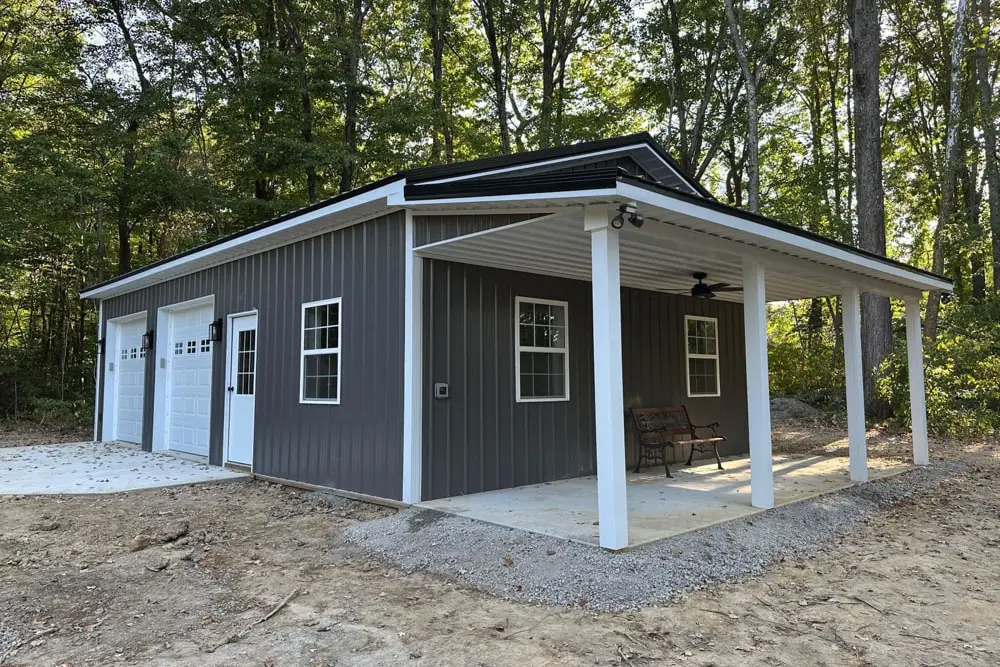
Every great building starts as an idea. A sketch on the back of a receipt, a conversation at the kitchen table, or even a photo saved to your phone. But moving from that spark of inspiration to a stamped set of engineered plans—that's where the magic (and muscle) happens.
If you’re like many of our clients, you’re already picturing your post-frame building in your head. Maybe it’s a 40x60 shop for your business, a new barn for the farm, or a multi-purpose garage with room for future expansion. Wherever you’re at in the journey, there comes a point where your idea needs to take shape on paper, in a way that satisfies building departments, meets code requirements, and still reflects your original vision.
And here’s why this phase matters so much: according to the National Frame Building Association, post-frame construction is up to 15% more cost-effective than traditional building methods—if it’s planned properly. That savings doesn't just happen by chance. It’s built into the design. Good planning means fewer delays, fewer changes, and more confidence when you finally put shovels to soil.
Let’s walk through how Dutch Builders helps you get from concept to construction-ready plans, why engineered post-frame drawings are essential, and what you can expect during the plan review process.
The planning process always starts with a conversation. Clients often come to us with a general idea of what they want: a certain building size, maybe some interior uses, and a few non-negotiables like a specific roof pitch or large garage doors. You don’t need to have it all figured out. Our job is to take your ideas—whether they're fully formed or still in the brainstorming stage—and start putting structure to them.
Early on, we’ll ask about your intended use for the building. Will it be for agricultural storage, light manufacturing, a residential garage, or a mix of uses? How many people will use it, and what kind of equipment or vehicles will go inside? These answers help us determine things like load requirements, insulation needs, and structural spans. We’ll also talk through your property layout, zoning requirements, and access points to make sure everything fits and flows the way it should.
From there, we begin defining the building envelope—its dimensions, orientation, height, and layout. It’s not just about fitting the space you need today, but planning for what your needs might look like down the road. We help you balance what’s practical now with what’s smart long term.
One of the biggest advantages of post-frame construction is its efficiency—strong structural performance with fewer materials. But that strength depends entirely on getting the load calculations, spans, and structural supports right from the start.
Every region has its own building code requirements for things like snow load, wind uplift, and seismic activity. These loads determine how the building must be engineered. For example, a shop in rural New York will have very different snow load requirements than one in central Virginia or coastal Oregon. We start with your zip code and build out the engineering specs from there.
Span refers to the width your trusses must cover without interior support. A 30-foot span is relatively simple, while spans of 40, 60, or even 80 feet require more substantial truss engineering. Spacing between structural posts also plays a role. Posts may be spaced 8, 10, or 12 feet apart depending on the loads and wall configuration. These posts are set into the ground or anchored to concrete piers, depending on your foundation plan, and they carry the weight of the roof, wind pressure, and everything in between.
The trusses themselves do more than support the roof. They also define the pitch, ceiling height, and any attic or storage space. Whether you want a shallow roofline for a low-profile look or a steeper pitch for a second-story loft, the truss system is a key part of your design. We’ll also determine what kind of bracing and sheathing is needed to stabilize the building under pressure from wind and snow.
Once your layout, structure, and loads are defined, we move into the engineering phase. This is where your concept gets turned into a formal, buildable design with stamped drawings that meet local code and are ready for permit submission.
A full engineered plan set typically includes a site layout showing the building location, orientation, and setbacks based on your survey or property boundaries. There will be a foundation and footing plan outlining post locations and depths, along with specific embedment or anchoring details. The framing layout covers post spacing, roof truss spacing, wall girts, and structural bracing, all drawn to scale.
Roof truss specifications, often provided by a licensed truss designer, are included along with the roof pitch, eave height, and load ratings. You'll also see side and end elevations showing how the building will look from each angle, including door and window placements. If your project includes interior build-outs, these spaces will be defined in the plans as well.
Each set of drawings is reviewed and stamped by a licensed structural engineer—usually one certified in your state. This professional stamp is more than just a seal of approval. It’s what local building departments look for when assessing code compliance and structural integrity. It shows that your post-frame building is designed to perform under real-world conditions.
After your plans are finalized and stamped, they’re ready for submittal to your local building department. This step is essential, especially for any structure larger than a simple ag-exempt pole barn.
The review process varies depending on your municipality. In some rural counties, approvals can happen within a few days. In larger towns or urban areas, you might wait several weeks due to backlogs or more detailed review requirements. On average, plan reviews take anywhere from one to six weeks.
During this review, the building officials check for compliance with structural codes, zoning regulations, energy efficiency standards, and safety features like ingress, egress, and fire protection. For commercial or mixed-use structures, they may also review ADA accessibility and mechanical systems.
We maintain strong working relationships with permitting offices across the region, and we’re happy to coordinate directly with reviewers if questions arise. Most departments appreciate working with stamped, professional drawings—it speeds up the process and reduces the likelihood of required corrections.
It’s common to tweak the design after your initial submission. Maybe you decide to upgrade from 10-foot doors to 12-footers, or shift the office to the opposite end of the building. The good news is that engineered post-frame plans are flexible and can be updated—within reason.
Simple changes, like relocating a window or resizing a non-load-bearing wall, can often be done with a quick revision or addendum. Major changes, like increasing the building footprint, altering the roof design, or adding a second floor, will require a more involved engineering update and possibly a new plan review.
We always recommend finalizing your must-have features before submitting, but if life changes or new needs arise, we’ll help you navigate those updates smoothly. Flexibility is part of the post-frame advantage.
To make the most of your planning consultation, we provide a simple Post-Frame Building Planning Worksheet. This guide helps you gather your thoughts before our meeting. We’ll ask about the primary function of the building, preferred dimensions, roof type, insulation needs, access points, and whether you plan to finish the interior. If you already have a lot layout or topographical surveys, bring that along too. It’s not required—but it helps.
This worksheet doesn’t lock you into decisions. It’s a tool to help us understand what matters most to you, so we can start designing a building that fits your life—not just your lot.
Building size changes everything. A 30x40 garage is typically straightforward, with standard trusses, simple footing plans, and wide approval in most rural areas. It’s ideal for personal use, hobby shops, and small storage buildings.
Move up to a 40x60 and you begin to see more complexity. You’ll likely add multiple garage doors, windows, and possibly interior partitions or utilities. This size often serves as a business workshop, vehicle storage, or combined use space, and it may trigger additional code reviews.
That’s where Dutch Builders makes a difference. We’ve seen it all, built it all, and guided clients through every size and scenario imaginable.
You might be wondering what information you’ll need to provide to get started. At a minimum, we’ll need your site location, desired building size, intended use, and a sense of what features you’d like to include. From there, we’ll guide you through structural choices, material options, and finish details.
As for how long it takes to get engineered plans, most projects are ready within one to three weeks, depending on complexity and revisions. Commercial or multi-use buildings may take slightly longer due to layered code requirements.
Permitting times vary, but you should plan for at least one to six weeks for review once plans are submitted. Simpler residential or ag-use structures tend to go faster.
If you’re building in a different state than where Dutch Builders is based, don’t worry. We work with a network of engineers licensed in dozens of states and can provide stamped plans that meet your local requirements.
Lastly, yes, plans can be revised after they’re stamped. Just keep in mind that major changes may require new calculations, new drawings, and an updated submittal. We’ll help you determine what’s feasible and what requires a formal re-approval.
There’s a reason our clients keep coming back and referring their friends. It’s not just the quality of our buildings—it’s the clarity of our process. We believe that every post-frame building deserves a strong start, and that starts with a clear, engineered plan designed around your needs.
You don’t have to navigate this alone. Whether you’re still dreaming or ready to start digging, Dutch Builders is here to help you make the leap from idea to approval with confidence, support, and craftsmanship that stands the test of time.
You bring the vision. We’ll handle the rest.
Schedule your planning session today.


