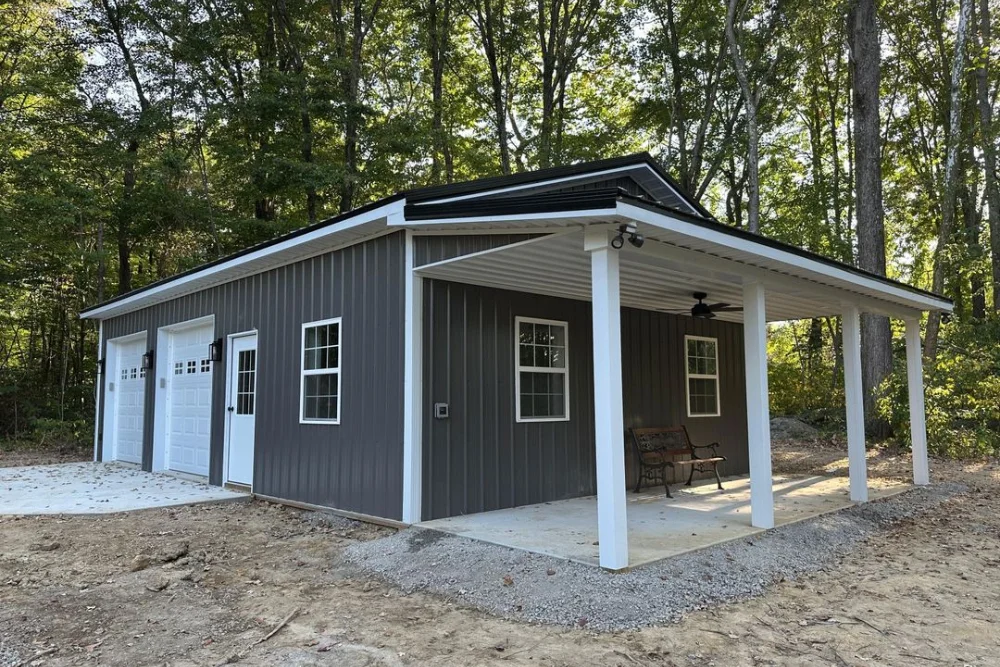
There’s a certain kind of search that only happens when you’re serious. You’re not browsing. You’re not daydreaming. You’re ready. That’s usually when people type “pole barn builders in my area” and start clicking with a little more focus than usual. Because once you’ve decided you want the building, the next question gets very real, very fast: “Who do I trust to build it right?”
And here’s the thing—choosing the right team isn’t just about getting a good-looking building at the end. It’s about how the process feels along the way. A build can be exciting, but it can also be stressful if communication is sloppy, planning is vague, or the schedule feels like a moving target. The good news is that you can avoid most of that by starting the right way, with the right builder, and asking the right questions early.
One statistic helps explain why early planning matters: the U.S. Census Bureau has reported that residential construction timelines are influenced by permitting, scheduling, and supply factors—not just the time it takes to swing a hammer. In other words, a smooth project is as much about coordination as it is about construction. That’s why the best pole barn builders near me aren’t just good builders—they’re good planners.
This post is designed for ready-to-start property owners. If you’re searching for the best pole barn builders, local pole barn builders, or pole barn builders in my area, consider this your practical guide to starting strong: what to prepare, how consultation works, how builders guide planning, and what happens next.
When people say they want the “best pole barn builders,” they’re usually describing three things, whether they realize it or not. They want craftsmanship that holds up. They want a process they can understand. And they want a builder who answers the phone and keeps the project moving.
The right team isn’t just a crew that can frame quickly. It’s a builder who can look at your land and tell you what matters, who can translate your goals into a real plan, who can anticipate approvals and inspections, and who can keep the build sequence organized so you’re not stuck waiting on the next step.
A strong builder will also be honest about what’s realistic. If your site needs drainage work, they won’t pretend it’s optional. If your design needs engineering because of spans or loads, they’ll say so. If your timeline depends on permitting and lead times for doors, they’ll map that out. That kind of clarity is worth its weight in gold.
A good consultation should feel less like a sales pitch and more like an experienced friend walking the property with you—asking smart questions, listening carefully, and giving you a clear sense of next steps.
Most consultations begin with the basics: what are you building and why? A shop, a barn, a garage, storage for equipment, a multi-use building with an office, or something that needs to evolve over time? How you plan to use the building drives everything else. A builder who jumps straight to price without understanding use is guessing. And guessing is how projects end up with regret later.
During consultation, builders typically discuss size, height, door needs, roof style, and finishes. But the best consultations also include practical questions like how you’ll access the building in bad weather, where water moves on your land, whether you want a slab now or later, and what “done” looks like to you.
If you’re wondering, “Can I discuss requirements before starting?” absolutely. In fact, that’s the whole purpose of a proper consultation: to put your priorities on the table before money is committed and concrete is poured.
You don’t need a binder full of blueprints to start. But you will get a lot more out of the first conversation if you bring a few practical pieces of information.
Start with your property address and a general idea of where you want the building. If you have a survey, that’s helpful. If not, you can still talk through placement and access. Think about how the building will be approached—driveway, gate widths, turning radius for deliveries—and whether the area is naturally high and dry or tends to hold water.
Next, think about use and storage. What will live inside the building? Vehicles, tractors, boats, tools, livestock supplies, a workshop, a lift, a future office? The size of your doors and the height of your interior clearances are often dictated by what you need to move in and out. A builder can help refine these decisions, but you’ll want to be ready to describe your must-haves.
Also think about your ideal timeline. Even if it’s flexible, it helps to share what you’re aiming for so the builder can discuss realistic sequencing around permitting, weather, and material lead times.
Finally, have a rough budget range in mind. You don’t have to announce a number like you’re on a game show, but knowing what you’re comfortable investing helps the builder steer you toward options that fit. Budget isn’t just about size. Doors, overhangs, insulation, interior liners, concrete, electrical, and site work can all influence cost.
If you’re a property owner ready to start, one of the most valuable things a builder can do is guide the planning so you don’t have to learn everything the hard way.
Planning guidance often includes site evaluation, building placement recommendations, and design choices that affect performance. Builders can help you decide whether you need more height, how to position doors for better flow, whether overhangs are worth it for weather protection, and how to plan for future expansion without rebuilding later.
They can also help you think through details you may not have considered, like where snow slides off the roof, how water will run off gutters, how to keep entrances from becoming muddy messes, and how to design storage so you’re not constantly reorganizing.
A builder’s planning guidance should never feel like pushing upgrades for the sake of upgrades. It should feel like preventing pain. Most “extra” features are only extra until you live without them.
Once you’ve had an initial conversation, the next step is usually a site evaluation. This is where a builder looks at drainage, grade, soil conditions, access, and utilities.
Good builders pay close attention to water. They’ll look for low areas, runoff paths, and how the building pad might need to be elevated or shaped. They’ll think about where downspouts will discharge and whether the building should be positioned to avoid wind-driven rain at key entry points.
They’ll also evaluate access for excavation and deliveries. A project can slow down quickly if trucks can’t reach the site or if equipment has to work around obstacles that weren’t considered. A professional builder wants your land protected and your schedule protected. Site evaluation is where both begin.
Permits can feel intimidating, especially if you’ve never built before. The good news is that experienced pole barn builders in your area usually know what your local building department expects and can help you navigate the process.
Some builders handle permitting entirely. Others provide the plans and documentation and guide you through submission. Either approach can work as long as expectations are clear. What matters is that you know what’s required, what the timeline might look like, and what inspections will likely occur during construction.
This step is also where structural documentation becomes important. Depending on your location, building size, and intended use, engineered plans may be required. Even when they’re not strictly required, they can help the project move smoothly because they provide clear, defensible design for loads and connections.
If you’re choosing between local pole barn builders, pay attention to how they talk about permits. If they treat it casually or dismissively, that’s a red flag. If they treat it as a predictable part of the workflow, that’s a good sign.
A quality consultation doesn’t end with vague promises. It ends with a clear sense of direction.
You should expect to hear a proposed scope based on your goals, a discussion of site considerations, and a rough outline of next steps. Builders may talk about preliminary design options, typical timelines for permitting and procurement, and what decisions need to be made early to avoid delays.
They should also explain how pricing is developed. A professional builder can’t give a perfect number without defined scope and site clarity, but they can often provide a realistic range and explain what moves that range up or down.
You should also expect clarity on communication. Who is your point of contact? How do updates happen? How are changes handled if you decide midstream that you want an extra door or a different finish? These process questions matter because they affect how calm or chaotic the project feels.
Once you decide to move forward, the project typically transitions into design finalization, documentation, and scheduling. Materials are ordered, lead times are confirmed, and the build sequence is planned so crews can work efficiently.
Construction itself generally progresses through predictable phases: site preparation, layout, post setting, framing, roofing and siding, trim and finishing details, and any interior work such as insulation, liners, electrical, or concrete as included in your scope. Inspections occur at required milestones, and a good builder plans around those so the project doesn’t stall.
The most important thing to understand is that good projects don’t “just happen.” They’re guided. When the builder is organized, the sequence flows. When the builder is disorganized, the owner feels it in delays, confusion, and last-minute decisions.
If you’re searching pole barn builders in my area, you’re already doing something smart: you’re looking for a team that can build for your land, your weather, and your local requirements. The best builders don’t just build structures. They build clarity. They help you start with a consultation that answers real questions, they guide planning so you don’t miss critical details, and they carry the project forward with a steady workflow that protects your timeline.
When you find the right team, you’ll feel it early. The questions they ask will make sense. The next steps will be clear. The project will feel like it’s being led, not guessed. And when the building is done, you won’t just have a new structure on your property—you’ll have the confidence that it was built the right way, from the first conversation to the final walkthrough.
Contact Dutch Builders today to find the right pole barn home for you and your family.


